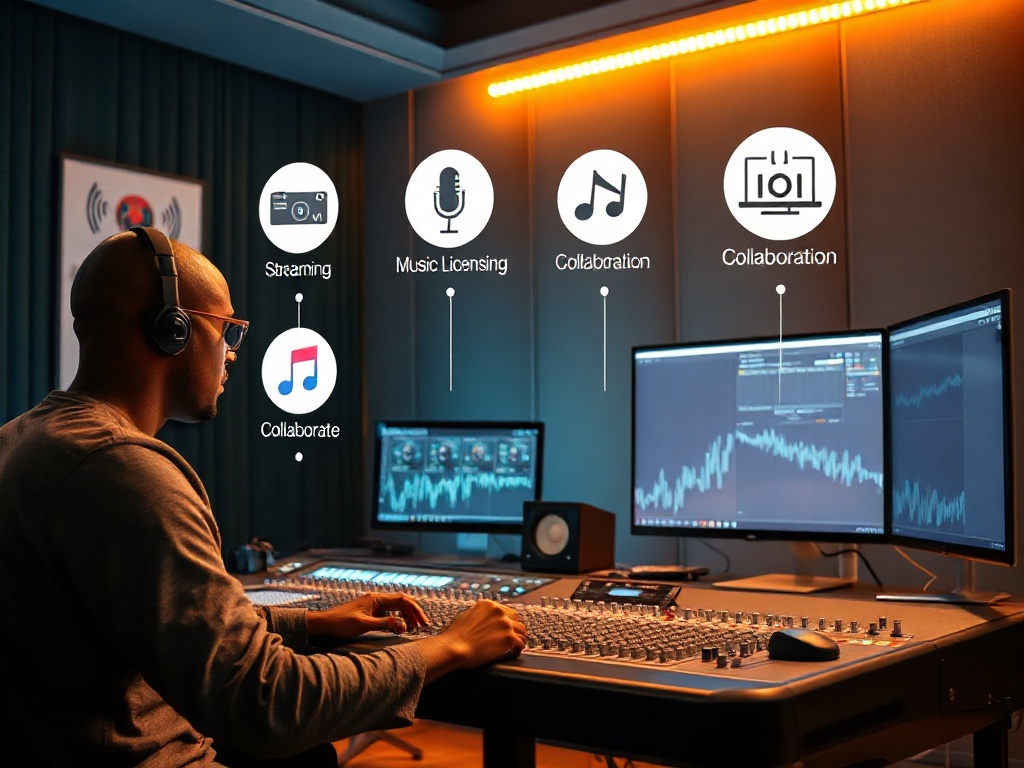
Building Multiple Revenue Streams: A Guide to Diversifying Income as an Independent Musician
Learn how independent musicians can build sustainable careers by diversifying income through streaming, licensing, production, and collaboration opportunities.
The Single Income Stream Trap
For years, the music industry told a simple story: make music, sell records, get rich. That worked in 1995. It doesn’t work anymore.
Today, independent musicians who rely on a single income source are vulnerable. Spotify payment rates drop. TikTok algorithm changes. One platform dies. Suddenly, your income evaporates.
The musicians who thrive? They don’t gamble on one income stream. They build multiple ones. Streams. Licensing. Production work. Teaching. Merch. Sync placements. Collaborations.
That’s not a side hustle collection. That’s a sustainable music career.
Why Diversification Matters
Income Stability
When you have five income sources and one drops 30%, you’ve lost 6% of your total income. Annoying, but survivable. When you have one income source and it drops 30%, you’re in crisis mode.
Creative Freedom
The pressure to chase trends disappears when you’re not dependent on any single platform or audience. You can make the music you actually want to make, knowing you have income security elsewhere.
Growth Opportunities
Each income stream opens doors to others. A sync placement leads to more licensing opportunities. Production work leads to collaborations. Teaching leads to mentorship relationships that spark new projects.
Reduced Burnout
Grinding on one platform, chasing algorithm changes, watching analytics obsessively? That burns people out. Having multiple projects and income sources keeps things fresh and sustainable.
The Income Diversification Playbook
1. Streaming (Foundation Layer)
Streaming should be part of your strategy, but not your whole strategy. Spotify, Apple Music, Amazon Music—they’re baseline revenue.
Real talk: you’re not getting rich from streaming alone. But combined with other income sources, those royalties add up. The key is getting your music on all platforms and making it discoverable.
2. Sync Licensing (Major Income)
This is where the real money lives. Music placed in TV shows, films, commercials, and trailers pays significantly more than streaming.
Sync camps teach you how to write music that supervisors actually want to place. You learn what licensing opportunities look like. You build relationships with placement professionals.
A single commercial placement can generate more income than months of streaming royalties.
3. Direct Fan Support
Patreon, memberships, and direct sales cut out the middleman. Your fans pay you directly for exclusive content, behind-the-scenes access, or early releases.
Even 100 fans supporting you at $10/month is $12,000 annually. That’s meaningful income that’s directly connected to your relationship with your audience.
4. Production & Collaboration
If you produce music, you have another income stream: producing for other artists. Session work. Beat sales. Production partnerships.
Even if you don’t consider yourself a producer, collaboration fees are real. You co-write a song that gets placed? You might earn writing/producer credits and royalties.
5. Teaching & Mentorship
Online lessons, courses, workshops, masterclasses—musicians have knowledge that others will pay for.
You don’t need to be a famous artist to teach. You just need expertise in something: production, songwriting, music marketing, music theory, etc.
6. Merchandise & Physical Products
Vinyl. CDs. T-shirts. Sample packs. These aren’t huge money-makers individually, but they’re another revenue touchpoint.
More importantly, they deepen fan relationships. Someone wearing your shirt is basically a walking advertisement.
7. Music Supervision & Advisory Work
Some musicians transition into curating music for platforms, advising on sonic branding, or working as consultants for music-forward projects.
This often happens after you’ve built credibility and network in the industry. It’s a higher-income opportunity once you have the right connections.
The Math That Works
Let’s look at a realistic breakdown for an independent musician:
- Streaming: $500/month
- Sync licensing placements: $1,000/month (averaged across placements)
- Direct fan support (Patreon): $400/month
- Production/collaboration work: $800/month
- Teaching/courses: $300/month
Total: $3,000/month ($36,000/year)
Not every month hits these numbers. Some months you get a big sync placement. Some months are lean. But across the year, diversification smooths out the volatility.
The person relying only on streaming? They’re looking at $500-1,000/month. The person with five income streams? They’re building something sustainable.
How to Start Diversifying Today
Step 1: Audit Your Current Income
Track where your music money currently comes from. Streaming? Direct sales? Collaborations? Identify your weak spots.
Step 2: Pick One New Stream to Develop
Don’t try to build everything at once. Pick one: Maybe it’s sync licensing (sync camps are perfect for this). Maybe it’s production work. Maybe it’s a Patreon.
Build that income stream intentionally for 3-6 months, then add another.
Step 3: Build the Infrastructure
Different income streams need different infrastructure:
- Sync licensing needs quality recordings and a catalog strategy
- Direct support needs a Patreon or membership platform
- Teaching needs a course platform or lesson booking system
- Production needs beats/samples or a producer profile
Step 4: Connect Your Streams
Your streams should feed into each other. Your sync placements give you credibility to teach about licensing. Your Patreon audience becomes potential sync licensing listeners. Your collaborations lead to production opportunities.
This interconnection multiplies your income potential.
The Sustainable Career Framework
Here’s what sustainable independent music careers look like:
Core Work (40% of time): Creating music, writing, production
Income Generation (40% of time): Sync licensing pitching, lesson planning, collaboration work, direct fan engagement
Business Development (20% of time): Building relationships, networking, exploring new income opportunities, analyzing what’s working
This is different from the “make music and hope it sells” approach. You’re intentionally building multiple income streams and treating your music career like an actual business.
The Mentality Shift
Most independent musicians think: “My music should be enough. If I’m good, it’ll succeed.”
Successful diversified musicians think: “My music is the foundation. Everything else is ecosystem.”
The music is always important. But the ecosystem around it—licensing, teaching, collaborations, fan relationships, production work—that’s what turns music into sustainable income.
The Long-Term Vision
Here’s what happens when you diversify:
Year 1: You’re still building. Multiple income streams are small. But combined, they’re meaningful.
Year 2: Some streams are growing faster than others. You double down on the most profitable ones while maintaining the others.
Year 3+: You have a sustainable music career. Income is stable. You have creative freedom. Burnout is minimal.
You’re not chasing trends. You’re not dependent on one platform. You’re not hoping for viral success.
You’re building something real.
What Prevents Musicians From Diversifying
Myth 1: “Real Artists Don’t Worry About Money”
False. Real artists want to keep making music. Sustainable income is what makes that possible.
Myth 2: “If I Focus on Anything Else, I’m Not a ‘Real’ Musician”
False. Teaching doesn’t make you less creative. Sync licensing doesn’t make you a sellout. Production work doesn’t diminish your art.
Myth 3: “I Need to Be Famous Before I Can Earn Meaningful Income”
False. Sync placements and direct fan support don’t require massive followings.
Myth 4: “Building Multiple Income Streams Is Too Much Work”
Fair critique, but: building ONE income stream that fails is also a lot of work. Diversification distributes risk, which actually makes the path more sustainable.
The Reality
Successful independent musicians today aren’t the ones with viral TikToks or massive followings. They’re the ones with sustainable income from multiple sources.
They write music for placements. They collaborate with other artists. They teach. They engage directly with fans. They produce. They explore opportunities.
This isn’t selling out. It’s smart. It’s sustainable. It’s what allows you to keep making music for the rest of your career.
Ready to Diversify?
Start with one new income stream. Sync licensing is a proven path—sync camps show you exactly how to approach this. Production work is another solid option. Direct fan support through Patreon is surprisingly accessible.
Pick your first stream. Build it intentionally. Then add the next.
Within a year, you won’t recognize your income stability compared to today.
That’s what diversification does.